Calendar of Forthcoming Training Events
This calendar lists all known forthcoming training events in the audiovisual archiving field, all around the world. The information it contains is taken from the CCAAA website. Should you want to add a training event to the calendar, please visit this page.

These workshops always take place on a Thursday. Possible formats include presentations plus a panel discussion and hands-on teaching. More can be developed as we gain experience. We don’t aim at experts. Usually, no previous experience is required. Advanced levels are marked as such and will provide knowledge for those who want to explore topics into more depths. The number of participants vary depending on the nature of the specific workshop, but is generally be limited to enhance knowledge transfer and discussion. No fee is charged, but participants have to register and places are limited. Information on how and when to register will be posted in the online calendar.

Since 2010, INA (French National Audiovisual Institute) organises the yearly FRAME training programme, with the support of EBU, FIAT/IFTA and the Creative Europe MEDIA programme.
The 2026 edition of FRAME starts with the opening of the FRAME Mentoring call for applications, until March 22nd.
The programme is addressed to all junior professionals (around max. 5 years of experience at the same or similar position) working in the audiovisual field. It aims at supporting them in their career path development and at implementing one of his/her project. 2 applicants will be selected.
The mentoring programme includes:
- Monthly online exchanges with your mentor and other relevant experts, from June to December 2026
- A professional immersion for two weeks at INA or in the mentor’s organisation, during the autumn 2026
- An accreditation to the next FIAT/IFTA World Conference, which will be organised in São Paulo, Brazil, on 6-9 October 2026.
All expenses (flights, hotels, lunches) are 100% covered by the programme scholarship.
FRAME Mentoring is primarily addressed to professionals involved in a project ongoing or to be launched soon. The mentee’s project could deal with (non-exhaustive list):
- Design and implementation of an archiving workflow
- Collect of audiovisual archives
- Preservation of audiovisual archives physical carriers
- Digitisation
- Audiovisual and film restauration
- Digital archive management
- Digital archive long term preservation
- Management, notably of an audiovisual archives department
- Documentation
- Implementation of a database and definition of data models
- Rights management
- Research and scientific access and projects using audiovisual archives
- Educative access and projects using AV archives
- General audience access project using AV archives
- Production of audiovisual contents based on archives (film, documentary, digital and innovative contents)
- Post-disaster handling of collections
About the Peer Learning Forum: Starting in July 2026, FIAF is launching an online discussion series that will focus on one topic each year, featuring references or working methods based on practice or research. Its aims are to give archivists opportunities to exchange experiences with similar challenges, reflect on a specific topic, and to expand FIAF’s pool of knowledgeable trainers.
Organized by: Lisabona Rahman (Training & Outreach Coordinator), Sreya Chatterjee (Technical Commission member), and Clara Sánchez-Dehesa (Elías Querejeta Zine Eskola, FIAF Supporter).
Content: What are the recent ideas, practices and studies within the film preservation field that give us strategies to cope with high temperature and humidity? This first FIAF Training & Outreach Peer Learning Forum will discuss strategies emerging from the working experiences of colleagues dealing with high temperature and humidity as the norm. The Forum will start as a reading assignment and online discussion, followed by two online experience-sharing sessions held in English and Spanish.
Target Group: People interested in the conservation of analogue and digital film, especially archivists who practice it or are responsible for making policies. As much as possible, the organizers will facilitate discussions in English and in Spanish. The schedule of the events also takes into account different time zones, to accommodate participants in as many geographical locations as possible.
Note that number participants will be limited, for participant comfort and interactivity. Selected participants will be expected to attend all three sessions. Only those who have will be entitled to receive a course completion certificate.
For more info on the Forum and its schedule, visit the website.
Save the date for the second edition of the FIAF Education & Outreach Autumn Lab! In 2026 FIAF and the Deutsche Kinemathek are again jointly organizing the FIAF Education & Outreach Autumn Lab in Berlin. Immediately before the film heritage festival Film Restored, film education stakeholders and members of the FIAF community will meet to discuss topics related to film education and outreach, this year with a particular focus on archival films and the educational work with film materials.
The annual FIAF Education & Outreach Autumn Lab offers an opportunity to reflect on the present and future of education as well as outreach in the field of film heritage. The lab engages with diverse concepts and perspectives on film education, presents exemplary outreach and education programs and puts examples into practice. In addition, the lab makes it possible to address field- and topic-specific but also social challenges and develop solutions or even joint projects within the network. In this way, film heritage education can be strengthened from many different perspectives (aesthetically, historically, media-critically, creatively, and practically).
The FIAF Autumn Lab intends to offer film archives, cinematheques and film museums, as well as committed specialists in the field of film education, a regularly recurring platform for exchange, knowledge transfer and networking. It has been conceived as a joint and collaborative structure in which FIAF-affiliated institutions – but also beyond – are invited to exchange ideas and help shape the content, methods and priorities of future educational work.
For more information, please check the website.
FRAME Basics 2026
Since 2010, INA (French National Audiovisual Institute) designs and organizes the yearly international FRAME training programme, with the support of EBU Academy, FIAT/IFTA and the Creative Europe MEDIA programme. FRAME includes 2 training sessions (FRAME Basics and FRAME Advanced), a mentoring programme (FRAME Mentoring) and workshops (FRAME Expert) organized with FIAT/IFTA and EBU.
The call for applications for FRAME Basics, the online training session of the 2026 edition of FRAME, is now open until October 1st.
- Target group: The FRAME Basics training session is addressed to all European and international professionals working in the audiovisual archives field, and aimed primarily at professionals who are willing to reinforce or acquire the fundamentals of audiovisual archiving (professionals with little experience, professionals who have had little or no training in this field, professionals working in organisations with few resources, etc.).
- Training programme: The training programme will cover all the audiovisual archiving process steps and aspects, from preservation, digitization, documentation to access, reuse and distribution. It will focus on fundamental knowledge and skills.
- Dates & place: The training session will take place online during 6 half-day, in two parts, from November 16-18 and November 23-25 2026
- Language: English
- Deadline to apply: October 1st
> For more information about FRAME Basics 2026 and to apply: FRAME Basics call for applications
> For more information on FRAME 2025: FRAME 2026 programme

Film Preservation & Restoration Workshop India 2026 (FPRWI 2026) is an initiative of Film Heritage Foundation in partnership with FIAF and in collaboration with The Film Foundation’s World Cinema Project, British Film Institute, L’Immagine Ritrovata, Institut National de l’Audiovisuel (INA), Cinemateca Portuguesa, The Metropolitan Museum of Art, New York, Yale Film Archive, and The Criterion Collection / Janus Films.
This 7-day workshop, open to applicants from all over the world, covers the complete range of the issues and topics required to work in the field of audio-visual preservation.
The curriculum includes both lectures and small group sessions on analogue film identification, repair and restoration, digitization and digital preservation and restoration, cataloguing, library sciences, paper and photograph conservation, programming, and much more. Classes will be followed by daily evening screenings of restored films from around the world.
Registrations open until 30 September via the dedicated webpage.

Presentation of the course:
On 1 and 2 March 2027, FIAF will join forces with the Cinémathèque française and the Fondation Jérôme Seydoux-Pathé once again to offer a short training course (in English and French) aimed at professionals in FIAF archives and beyond. The general theme of this specialized course is still "Programming Film Heritage", and will once again be taught by programming experts from the global network of FIAF archives and other distinguished professionals in a relevant field. This 12th edition of the Winter School will take place on-site only, at the Fondation Jérôme Seydoux-Pathé and at the Cinémathèque, on 1 and 2 March 2027, just before the Cinémathèque française Festival.
Speakers & Programme:
The classes (a mixture of lectures, workshops and round-table discussions) will be taught by programming experts from the global network of FIAF archives, and other distinguished professionals in a relevant field. Note that presentations will be delivered in English or French, with simultaneous translation available throughout the course. A more detailed schedule will be published in early 2027.
Registration:
Registration for the 2027 FIAF Winter School will open in January 2027.
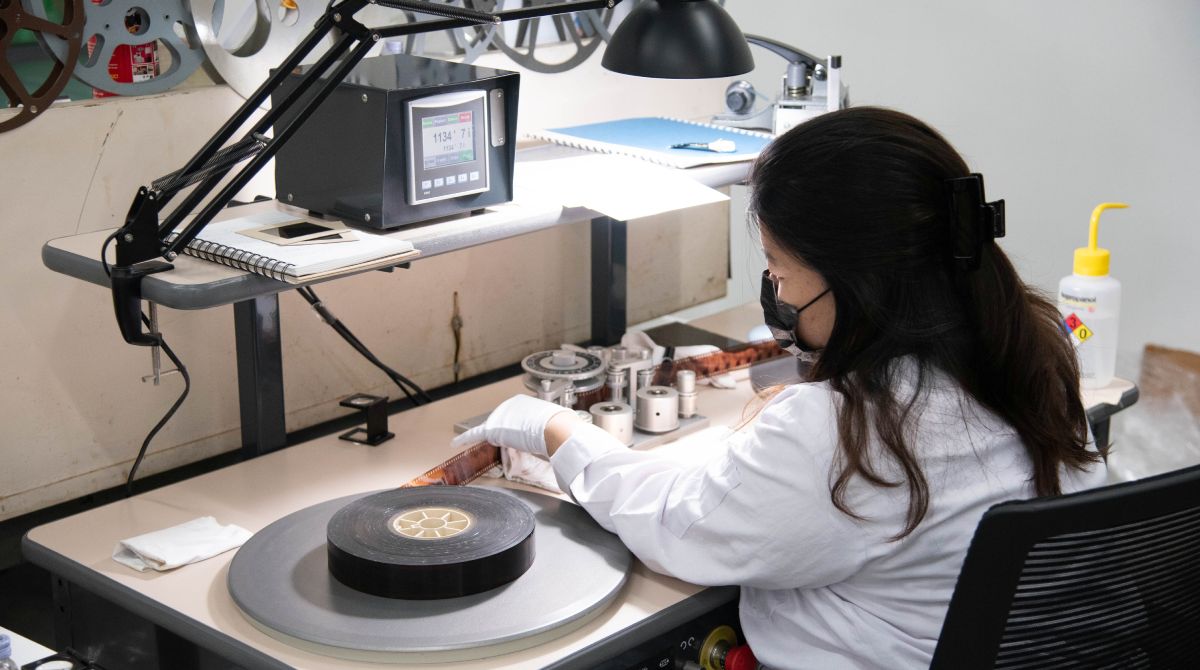
The 4th edition of the Biennial Audio-Visual Archival Summer School (BAVASS) will be held from 8 to 16 May 2027 in Bangkok, Thailand. The event is organized by FIAF and the Thai Film Archive (Public Organization), in collaboration with SEAPAVAA.
Audiovisual preservation takes place simultaneously across the globe, providing endless inspiration for developing our collective knowledge as a global community of archivists. This edition will draw on preservation experiences from Southeast Asia as a starting point for reflecting on the knowledge and practices that have developed over the decades, particularly in the Northern hemisphere.
The eight-day summer school will cover the full preservation workflow, including collection management, audiovisual conservation, restoration, programming and analogue projection. International experts in the field will share their knowledge and experiences with the participants. The learning materials will be enriched with examples of collaborative work in audiovisual archiving involving diverse entities, such as institutional archives, community organizations, individuals, and international organizations.
The summer school will include lectures, case studies, and hands-on workshops on film, video, digital audiovisual formats, sound, programming and film-related materials. In addition to classroom activities, participants will have access to restored film screenings and preservation facility tours. The courses and additional activities will be conducted in English.
BAVASS is open to applicants from around the world. The courses are designed for film preservationists, archivists, restoration technicians and students with a particular interest in learning from global audiovisual preservation practices. Applicants may be considered for one of several scholarships supporting course fee and partial travel cost.
The details about the courses, scholarship and application form will be available in January 2027.
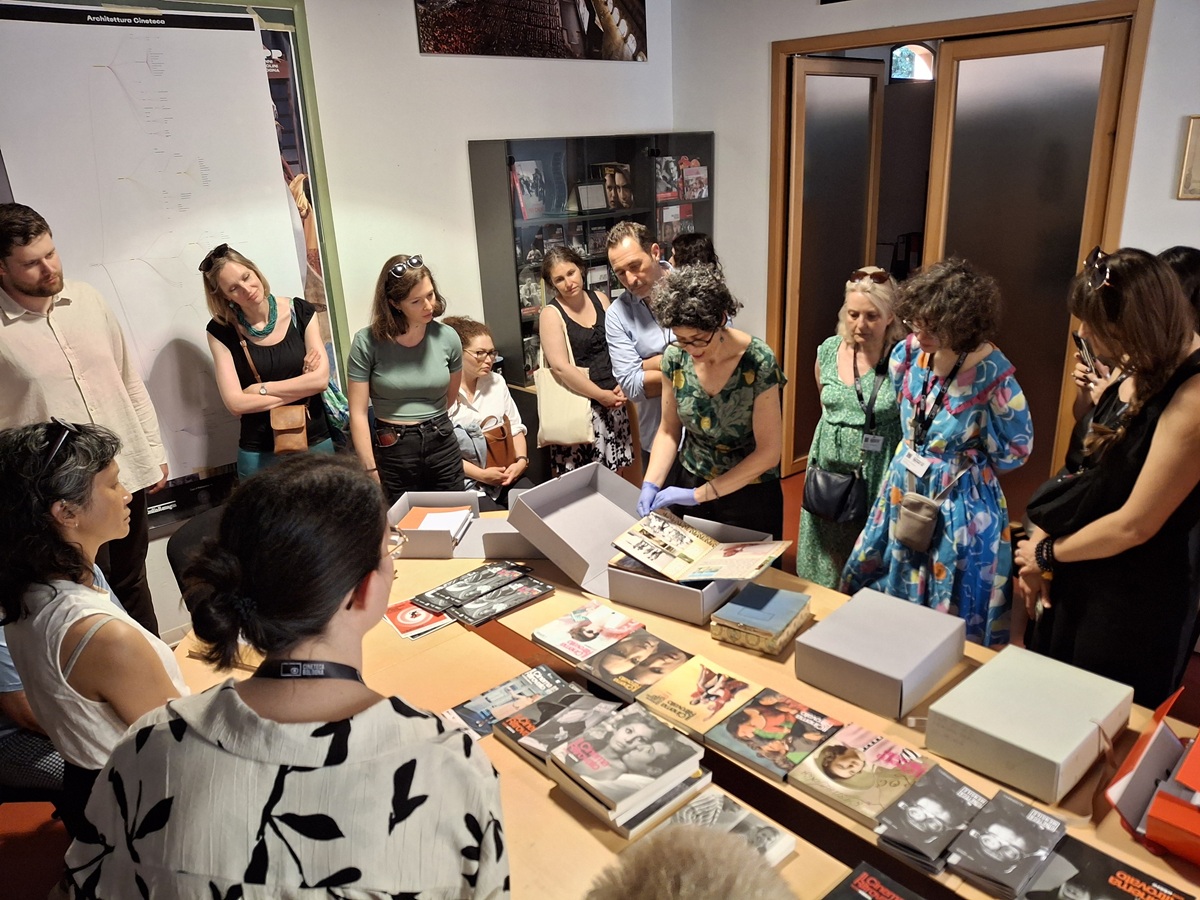
In February 2026, BFI Special Collections announced a name-change to Screencraft, a name that reflects both the work of the archive and the collections we care for. This is a change that recognizes that the labour that goes into making a film requires expanding the meaning of filmmaker to all those involved, and identifying the various crafts that shape it found in film-related collections. These paper archives hold stories not only of finished films, but of the process of making. Across all departments and all levels of the industry, these documents speak to the people and the craft of filmmaking.
The focus for this workshop is to consider the craft and making of films, with a view to caring for collections that not only reflect the collaborative nature of filmmaking, but the various skills and roles within it, both above and below the line – from directors and screenwriters, to costume and set designers, script supervisors, publicists and casting directors. We'll be asking who makes films, and how is this evident within film-related collections? Are we surfacing these stories and the collaborative nature of filmmaking enough? How might we ensure that film-labour that has been historically overlooked, is now noticed and given their right place in the archive and to the history of screen work?
With this workshop, the CDC would like to offer a place and framework in which precisely the specific issues relating to film-related materials can be discussed openly and experiences exchanged. After successful workshops in Stockholm and Bologna on cataloguing film-related materials in 2023 and 2025, we are happy to continue our fruitful discussions on these topics in London.
The classes (a mixture of lectures and workshops) will be taught by experts from the global network of FIAF archives, and other distinguished professionals in a relevant field.
The detailed schedule will be available in early 2027.
Applications for registration will be open from 1 February to 1 March 2027, via an online form. Successful candidates will be notified by email by 15 March. The course is offered free of charge and includes lunch on the first day and coffee breaks. Participants are expected to make their own travel and accommodation arrangements. Note that the course will be limited to 40 participants.
We will welcome proposals for our lightning talks session (5-minute input per talk), which can be submitted in the registration process.
FIAF will offer some financial assistance to a limited number of participants, to cover part of their travel and accommodation costs. More information will be available when registrations open.





partnership with