2025 Montreal Symposium
Session 2 - Restore, Transform
Montreal, 28 April 2025
Please do not publish or re-use in any way any of these documents without prior permission of the speakers.
Restoration as Creation
Peter Bagrov (George Eastman Museum)
Jeanne Pommeau (Národní filmový archiv)
“Restoration and reconstruction are not acts of creation”... In the many discussions of the revised FIAF Code of Ethics drafts over the past couple of years, this phrase raised a wide range of questions and concerns. Inevitable for some archivists and restorers unacceptable for others, this idea may be one of the stumbling stones of our profession.
When an archive reconstructs a film from several incomplete prints, choosing “the best shots” from A and B negatives, it takes upon itself the role of an editor or the director themselves. When missing tints and tones, or even full-colour sequences, are recreated without any reference elements, the archive steps into the territory of designers and cinematographers. And if the soundtrack has survived incomplete, an archivist can become a sound engineer. In short, to make the film presentable, archivists invite themselves to join the crew of a film made forty, seventy, or one hundred years ago. Sometimes the interventions are so radical that the result should probably be considered a new work. And one should not forget many fascinating cases when archives assembled works that had never been completed (including films by Clouzot, Dovzhenko, Eisenstein, Welles and others).
These examples might be extreme, but they are not infrequent in the past of film archives and in their present. But what about grading, a seminal part of the filmmaking process that has to be recreated, not just replicated, during restoration? It is bound to be subjective. The less sources of information a film restorer has, the more they tend to compensate with creation.
When does approximation and intervention turn into creation? Is it possible to determine the boundaries? Perhaps creation is a necessary evil of film restoration. Or perhaps full transparency and clarity of definitions (restoration vs. reconstruction vs. construction of an unfinished work, etc.) might partially resolve the problem.
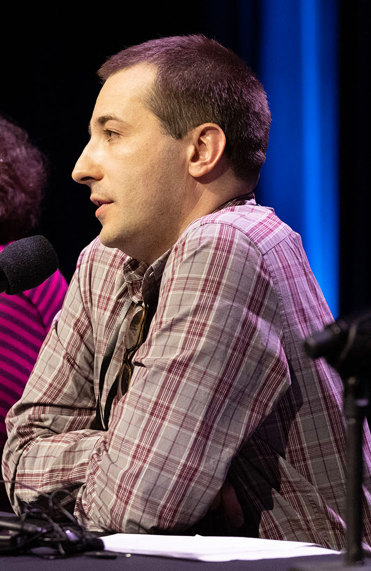
Archivo Memoria: Reapropiación y Reflexión desde el Cine Casero
Tania López Espinal (Cineteca Nacional México)
Since its inception in 2010, the Archivo Memoria programme of the Cineteca Nacional de México has been dedicated to preserving, stabilizing, and digitizing small-gauge film materials (16mm, 9.5mm, S8mm, and 8mm), creating a physical and digital repository that safeguards over 6,770 reels. These films, shot between 1920 and 2009, provide an invaluable testimony of Mexico's social and cultural fabric, capturing family dynamics, urban transformations, and human interactions over time. The programme not only prioritizes preservation but also fosters creative reappropriation of its collection. In 2023, as part of the Home Movie Day celebration, we collaborated with the Faculty of Arts and Design at UNAM to develop a collective creation project. Students from the Research and Production Laboratory in Video Art course reinterpreted materials from Archivo Memoria, producing eight short films that explored themes such as identity, memory, family, and nostalgia. These works were screened at the Cineteca Nacional, marking a milestone in our engagement with the academic community and highlighting the archive’s potential as a platform for new symbolic and aesthetic meanings. This initiative enriches the discourse on home movies and paves the way for future collaborations with other universities. Through ethical and creative reappropriation, Archivo Memoria seeks to transform these records into living tools for research and creation, renewing their cultural and artistic value.
Réimaginer l'archive
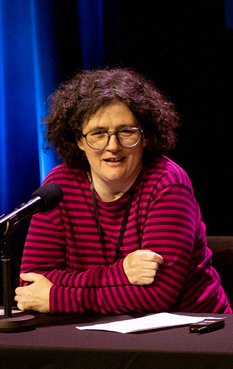
Erin Weisgerber (Filmmaker, Montreal)
Erin Weisgerber is an artist based in Tiohtià:ke/Montreal who works with photochemical film to produce installations, performances, and short films. The filmmaker presents a work commissioned by the Cinémathèque québécoise, which she is currently working on.





partnership with