 ©Cinémathèque marocaine
2026 Rabat Symposium
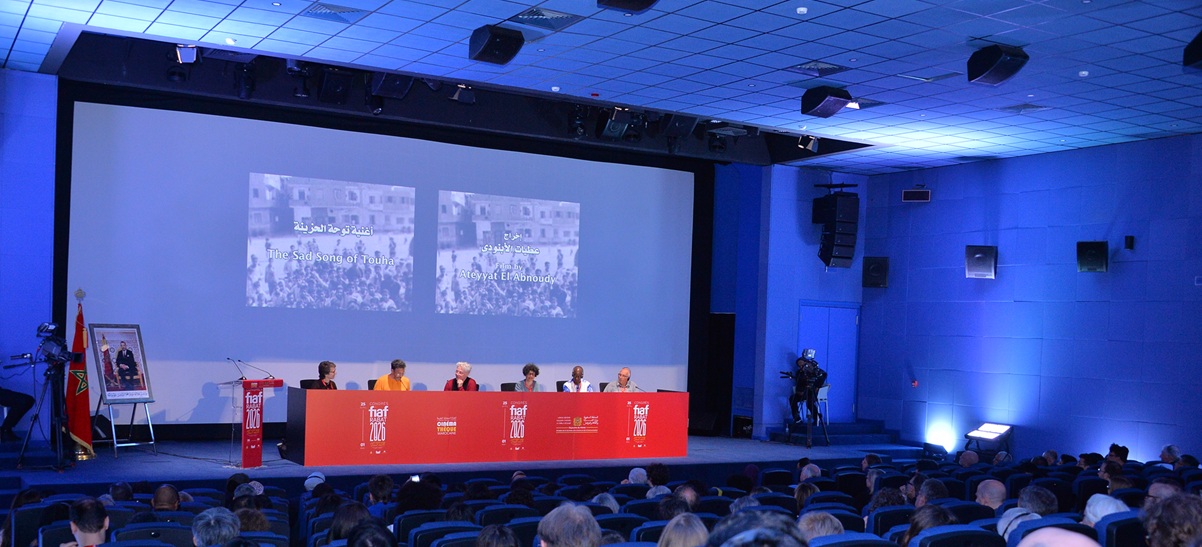
Session 7 - Transferring and Exchanging Knowledge in Film Preservation, Part I
Rabat, 28 April 2026
Please do not publish or re-use in any way any of these documents without prior permission of the speakers.
A la Cinémathèque africaine de Ouagadougou, un esprit de partage pour sauvegarder le patrimoine, former les jeunes professionnels et préserver l’identité des peuples
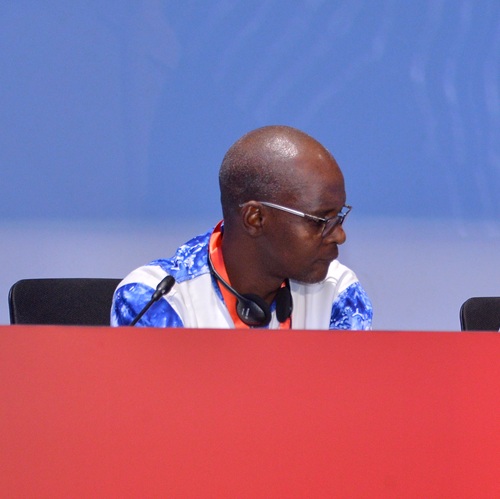
Bassirou Zoundi (Agence Burkinabè de la Cinématographie et de l'Audiovisuel)
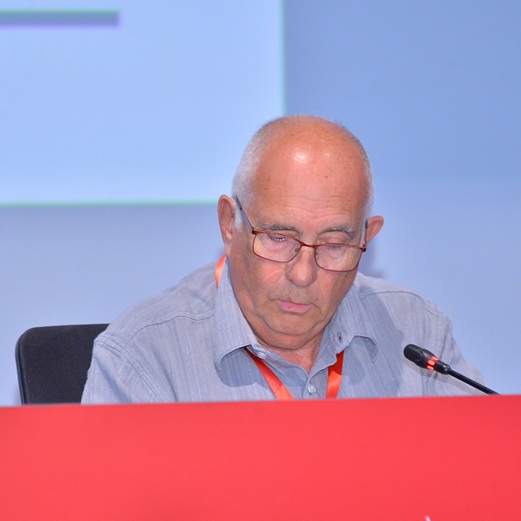
Marc Trille (Archivistes Sans Frontières)
Cultural and documentary heritage is regularly put at risk by human activity and natural disasters. Whilst archivists cannot preserve what has been irretrievably destroyed, it is their responsibility to act as "guardians" of memory, ensuring the integrity and value of the collections that will be accessed. They also play a vital role in promoting democratic transparency. Archivistes sans Frontières' projects must include the safeguarding of human rights – both individual and collective – and respect for peoples’ identities.
In 2018, training workshops – a new initiative in ASF’s work – found all the necessary conditions in Burkina Faso. Using a unique educational approach, the first practical learning experience involved cataloguing the historical archives of the Bobo-Dioulasso district.
Subsequently, two successive "training workshops" were organized at FESPACO’s headquarters in Ouagadougou. These initiatives enabled the classification and cataloguing of all the cinematheque’s celluloid films, films on other media, 700 film posters and around sixty boxes of administrative archives. During FESPACO 2025, a stand run by ASF enabled members of the public to identify photographs held in the photo archive.
Beyond scholarly work, it is worth highlighting the interaction between future archivists and the film archive’s staff, which demonstrated the enrichment of expertise, a shared vision of preservation and dissemination, opportunities for collaboration, the exemplary nature of voluntary work, the commitment of younger generations of archivists to the cinematic heritage preserved at the Cinémathèque africaine de Ouagadougou.
The work carried out by the archiving students during these educational workshops is simply one more brick added to the wall of efforts contributing to the protection and preservation of an invaluable heritage.
Re-Mastered: From restoration to restitution | A transnational model for film preservation
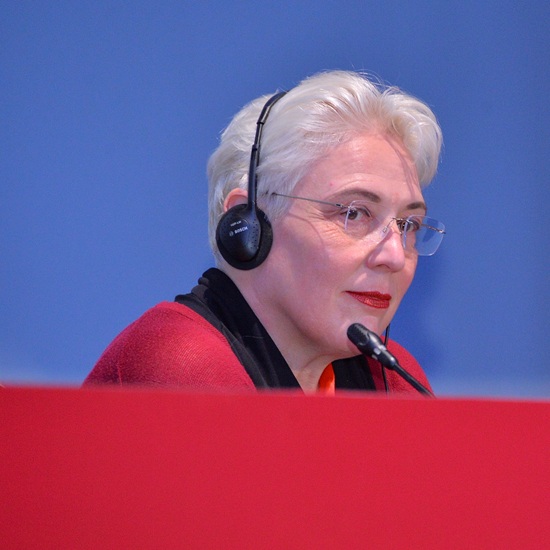
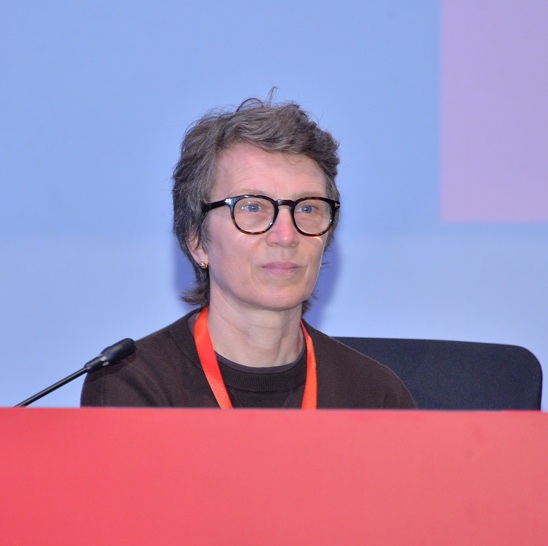
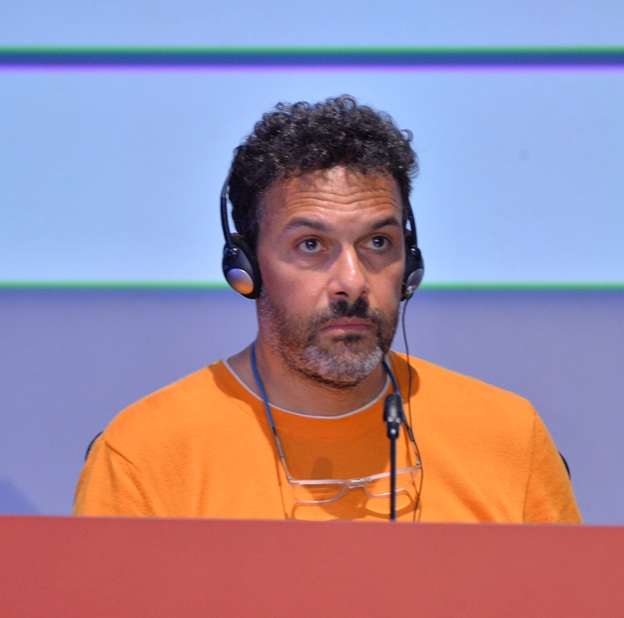
Anne Gant (Eye Filmmuseum)
Giovanna Fossati (Utrecht University)
Tamer El Said (Cimatheque – Alternative Film Centre)
This panel presents Re-Mastered: Digital Film Restoration Training Program as an innovative model for developing equitable, transnational infrastructures for film preservation across the Arab, African, and European contexts. Organized by Cimatheque – Alternative Film Centre in Cairo, in partnership with Sudan Film Factory, and in collaboration with many international archive institutions, including Eye Filmmuseum and Utrecht University, the programme responds to the urgent need to safeguard Arab and African cinematic heritage while confronting the longstanding centralization of restoration facilities and archival expertise in the Global North.
Re-Mastered was conceived as a practice-based and collaborative initiative that builds local restoration capacity and cultivates long-term networks of exchange. By establishing a fully equipped, independent restoration unit at Cimatheque and training advanced post-production practitioners from the region, the programme enables digital film restoration to take place locally and sustainably. This shift challenges inherited dependencies on external institutions and reconfigures the flow of archival knowledge, expertise, and decision-making power. Beyond technical training, Re-Mastered functions as an act of cultural restitution; reclaiming the right of access to Arab and African creative works historically held in Western archives, and restoring the rights of local expertise to reclaim their heritage and own their narratives. Its collaborative framework challenges existing hierarchies in archival practice and redefines transnational cooperation through models of parity, reciprocity, and mutual exchange. In this session, we will discuss the project of scanning and restoring films of Egyptian filmmaker Ateyyal El Abnoudy, found at Eye, and restored by the participants of the Re-Mastered programme. The panel will bring together representatives from Cimatheque, Eye Filmmuseum, and Utrecht University to discuss how Re-Mastered not only restores films but also restores agency: creating a foundation for access and collaboration that supports new models of research, knowledge production, creative practice, and distribution. Capitalizing on the growing network of practitioners formed through the program, Re-Mastered lays the groundwork for reimagining the infrastructures, methodologies, and ethical paradigms of film heritage restoration in the Arab and African contexts.





partnership with