 ©Cinémathèque marocaine
2026 Rabat Symposium
Session 3 - Making Restitution Possible, Part I: Inventing Methods and Frameworks
Rabat, 27 April 2026
Please do not publish or re-use in any way any of these documents without prior permission of the speakers.
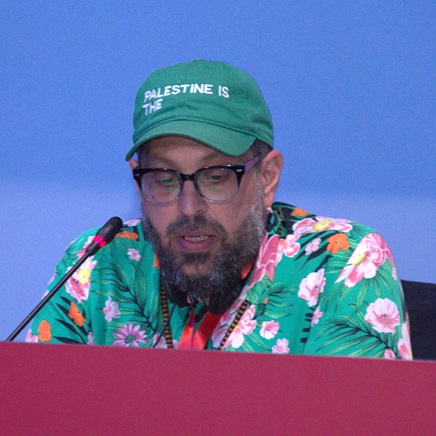
Recovered images: A gaze of restitution - A research presentation on inventories, transcripts and kinships
Mohanad Alyacoubi (KASK School of the Arts Ghent)
In 2021, an Israeli filmmaker transferred a collection of Israeli army archive clips to the Palestine Film Institute, an organization dedicated to supporting, promoting, and preserving Palestinian cinema. The filmmaker considered it vital for Palestinian filmmakers and researchers to have access to this material. Currently, the Israeli Army archive lacks known online access or a publicly available inventory. It is only accessible on-site after obtaining security clearance, effectively
making military intelligence the initial gatekeeper for who can view the collection. The received collection, digitized from VHS and originating from 16mm film scans, comprised 30 clips totaling approximately 15 hours of rushes. These originated from diverse sources, including British Mandate, humanitarian agencies, and political parties film archives. Characterized as fragmented images, mostly silent and lacking titles, they were compiled as sequential clips, typically with black slide transitions and occasional added text from Israeli army archivists. These clips have appeared, often without proper attribution or clear context, in numerous Israeli and Western films to represent "Arabs".
Considering these 15 hours of film material, several questions arise. What can be discerned about the Israeli army archivist’s perspective? How can this perspective be studied without replicating the very viewpoint being critiqued? Is there a “poetics of erasure” evident in the marks left by the perpetrating archive—watermarks, dot-codes, fast-forwarding, muting, desaturation, and other such manipulations? What lies beyond the frame, what has been removed through editing, and what images were initially omitted? Furthermore, what narratives can be “critically fabulated” from the most minimal remnants and traces through meticulous archival analysis?
This presentation engages with archival practices as a form of care in response to potential erasure. It involves translating connections and relationships into film inventories, audio transcripts, credits, and captions. Clips are screened and analyzed against the backdrop of ongoing atrocities and aggressions in Palestine and elsewhere.
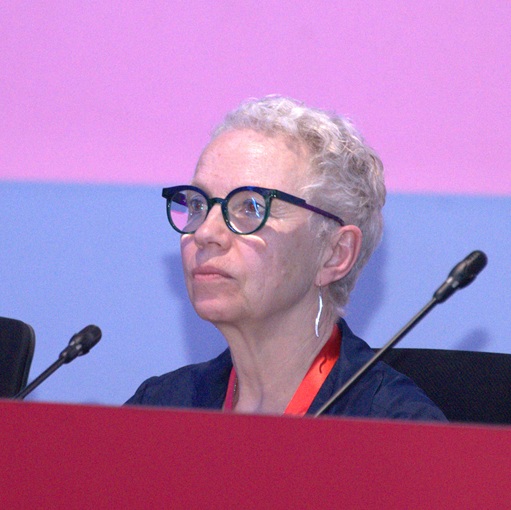
Restitution as a transnational collaborative project: Addressing archival displacement in projects from Sudan, Egypt, and Ghana
Erica Carter (King's College London)
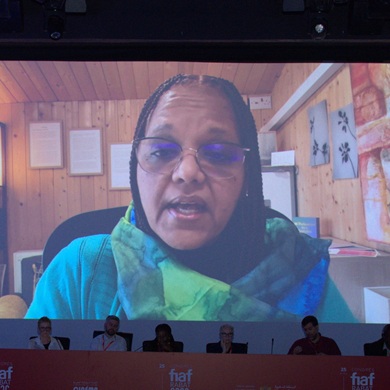
Eiman Hussein (Hussein Shariffe Foundation) [joining online]
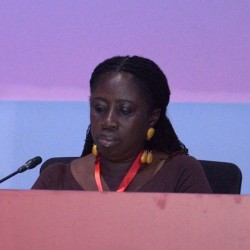
Judith Opoku-Boateng (University of Ghana Archives)
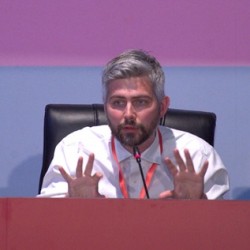
Dan Hodgkinson (Oxford University)
This paper presents insights into restitution of African audiovisual heritage from the collaborative research project Unhousing Restitution. African audiovisual heritage between displacement and return (UNREST). Funded by the UK Arts and Humanities Research Council, UNREST builds on prior work in Sudan, Egypt, Ghana, Germany and the UK to develop Africa-led methods and approaches to audiovisual heritage restitution. Its framing term, "unhousing", derives from Sudanese artist-filmmaker Hussein Shariffe. Writing in exile from Islamist dictatorship, Shariffe described the "unhoused energies" released by states of exile. UNREST harnesses those energies by recasting restitution as a collaborative endeavour led by archivists and artists on the African continent.
Connecting the project’s prior initiatives is a comparative focus on displaced archives. Hussein Shariffe’s films and documents are held in Berlin and London. Since 2021, Erica Carter has collaborated with the Sudan Film Factory, Cimatheque, Arsenal Filminstitut, the BFI and Hussein Shariffe Foundation to preserve, reactivate and recirculate this migratory collection. Tamer El Said leads Cimatheque's archive-based project Rewind Forward (RWF), which shares with UNREST a focus on the exile archive of Hussein Shariffe, alongside the fragmentary collection of Shariffe’s one-time collaborator, pioneer Egyptian documentarian Atteyat Al-Abnoudy. Dan Hodgkinson has worked in his Visions of Life project alongside Jim Fara Awindor of the Ghana Academy of Film and Television Arts (GAFTA) and Ghanaian filmmakers to reclaim the past futures imagined in Nkrumah-era Ghana government films—whose only copies currently languish in a London warehouse. This panel presents these interconnected projects, and outlines UNREST’s collaborative strategies for comparative research on recovery, repatriation and re-use.
The conservation of the African film heritage in Angola and Mozambique: International collaboration in a post-colonial context
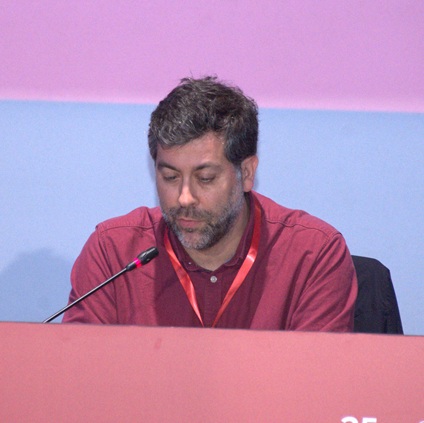
Tiago Baptista (Cinemateca Portuguesa)
Domingos Magalhães (Agência Nacional das Indústrias Culturais e Criativas - ANICC)
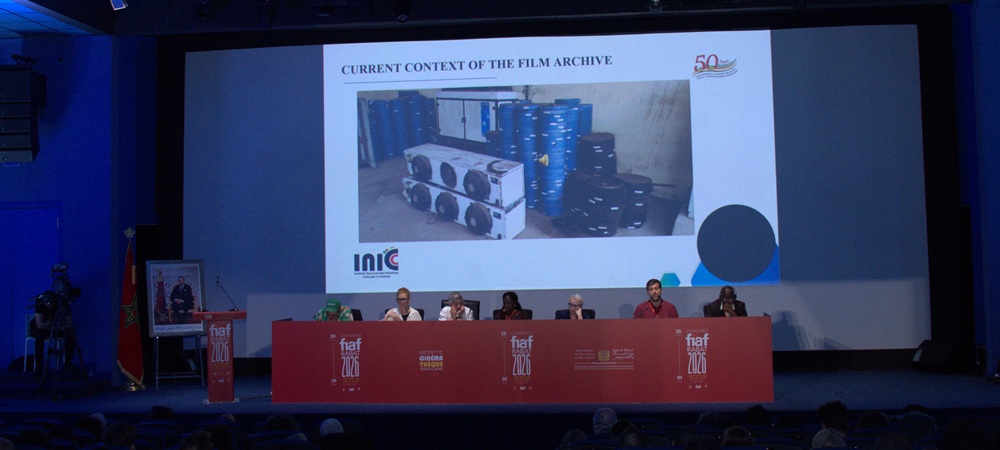
José Zitha (Instituto Nacional de Industrias Culturais e Criativas - INICC) [joining online]
This paper presents individual and collaborative conservation projects of Angolan, Mozambican, and Portuguese film heritage, whose common history is tragically united by the brutal history of Portuguese colonialism.
The ANICC is the custodian of the film collection of the Instituto Angolano de Cinema (IAC), responsible for Angolan film production following the country’s independence from Portugal in November 1975. The ANICC has incorporated the former Cinemateca Nacional de Angola, which was a FIAF affiliate in Angola from 1981 until 2022. This archive is currently constructing a new Film Conservation, Restoration and Digitisation Centre in Luanda. It is also refurbishing a cinema that will become the new Cinemateca de Angola and the centre of its programming activities. In Maputo, the INICC is the successor to the Instituto Nacional de Cinema (INC), established after Mozambique gained its independence from Portugal in June 1975 and was responsible for producing the most important Mozambican films in the post-independence period. The INICC, a FIAF affiliate since 2012, currently struggles with challenging conservation conditions of its film collections, but has nevertheless managed to digitize some titles through international collaborative projects. The Cinemateca Portuguesa holds hundreds of films shot in Angola and Mozambique during the colonial period. It has been working with the ANICC and INICC to return digital copies of these films to the two countries, based on the shared understanding that those films are part of a collective film heritage. In response to requests from the ANICC and the INICC, the Cinemateca has also developed training programmes tailored to the needs of these archives and has engaged in the photochemical preservation and digitization of Angolan and Mozambican films.
This paper aims to showcase the ongoing efforts of film archives in Angola and Mozambique to conserve African film heritage, and to encourage new regional and transcontinental collaborations to advance these efforts further. It will also present the three countries' views on the ongoing restitution process of African film heritage, which is taking shape through the return of digital film copies to Angola and Mozambique and the consolidation of their film heritage institutions via training and collaborative projects. Finally, the presentation will address how these collaborative initiatives can facilitate more effective dialogue with younger generations about the history of Portuguese colonialism and the independence movements in Angola and Mozambique.





partnership with