
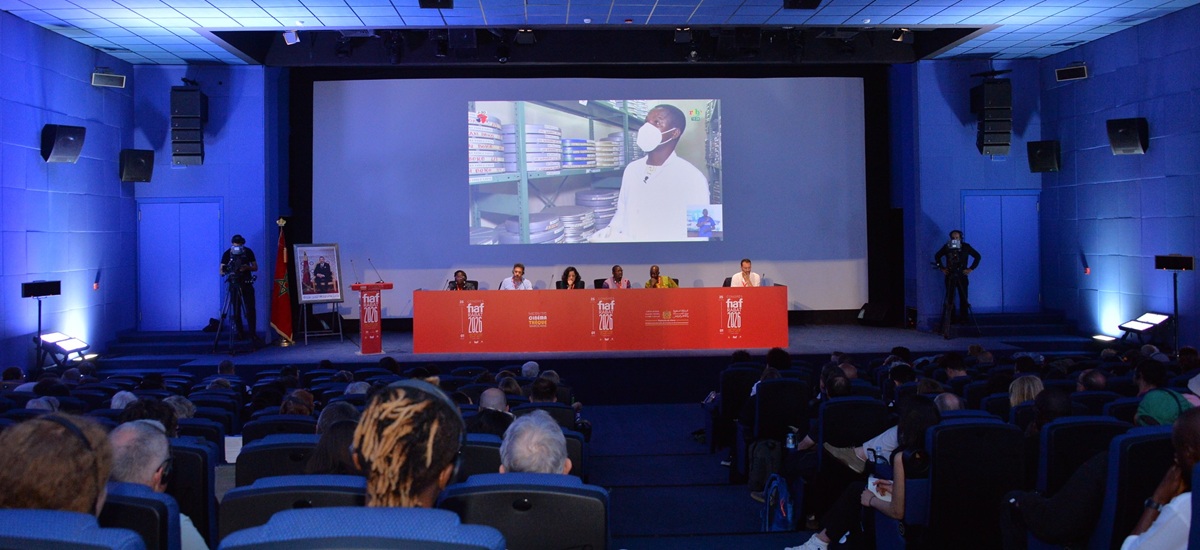
 ©Cinémathèque marocaine
2026 Rabat Symposium
Session 2 - Strategies for Recovery and Consolidation of African and Arab Film Heritage
Rabat, 27 April 2026
Please do not publish or re-use in any way any of these documents without prior permission of the speakers.
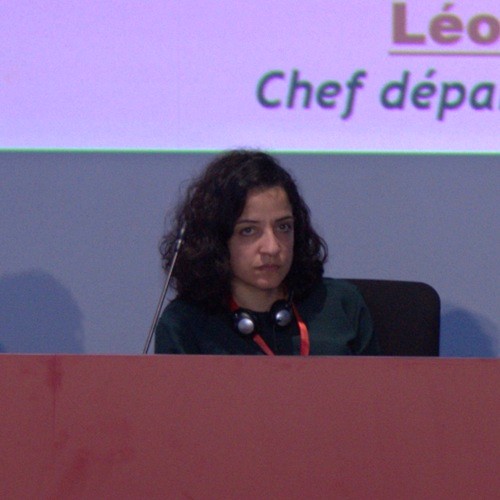
La Cinémathèque africaine de Ouagadougou: 35 ans de mémoire cinématographique d’un continent
Léonce Tira (Cinémathèque africaine de Ouagadougou - FESPACO)
Bassirou Zoundi (L'Agence Burkinabè de la Cinématographie et de l'Audiovisuel)
Established in 1989 through the joint efforts of African filmmakers and the Burkinabe government, the Cinémathèque africaine de Ouagadougou has since established itself as a unique institution dedicated to the preservation, promotion and dissemination of Africa’s cinematic heritage. Today, it stands as an essential institution, bringing together a film archive, film-related materials, rare artefacts and preservation initiatives that bear witness to the richness and diversity of African cinema and its diaspora. It houses over 14,000 film works on various types of media. These archives are on various media that are very often fragile, and are also housed in unsuitable facilities where the necessary conditions for preservation are not always met.
The aim of this study is to highlight the pioneering role of the Cinémathèque africaine and its vital mission to preserve African film works threatened with extinction, to demonstrate the role of the Cinémathèque across the continent through the diversity and richness of its collections, to present initiatives for the preservation and promotion of memory through screenings, workshops, exhibitions and, finally, its efforts to build collective memory, which is essential for research, education and transmission to future generations.
This study draws on the presenters' professional and pedagogical expertise as well as documentary research.
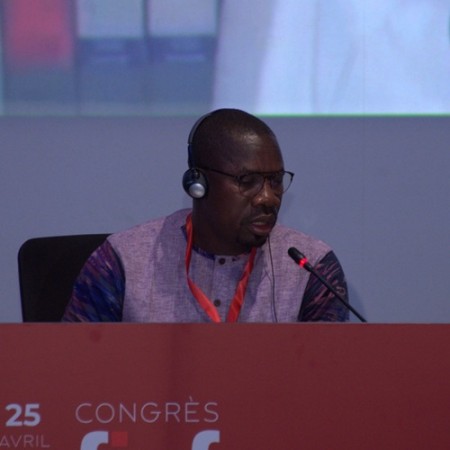
Resource efficient digitization: The Malawi 16mm Film Project
Bright Joshua (National Records and Archives Services of Malawi) [joining online]
The National Records and Archives Services of Malawi (NRAS), with support from the Rei Foundation Limited (RFL), implemented a five-year 16mm film digitization project to safeguard deteriorating audio-visual materials documenting Malawi’s social and political history. This paper outlines the cost-efficient digitization techniques, affordable equipment, and preservation strategies adopted to carry out the work in a resource-constrained environment.
The project employed a low-cost, do-it-yourself (DIY) digitization setup to capture images from deteriorating film reels. Key outcomes included the digitization of over 220 films, establishment of a dedicated film repository, development of a prioritization framework and setting adopted digitization workflow, capacity building for local staff, and the establishment of collaborative partnerships with national and regional institutions.

Mapping film heritage in Egypt
Tamara Maatouk (The American University in Cairo)
Egypt’s film industry is among the oldest in Africa and the Arab world, yet much of its paper trail and heritage remains fragmented, unevenly preserved, and difficult to navigate. This presentation offers an overview of the current landscape of film archives and archival resources in Egypt, focusing on what materials are available, where they are held, and how filmmakers, researchers, and cultural practitioners can engage with them today. This presentation explores several sites of Egyptian film heritage, including state-run institutions such as the National Film Center and the Cinematic Cultural Center, as well as private collections housed within film centers and initiatives like the Cimatheque–Alternative Film Center, the Egyptian Catholic Center for Cinema, Wekalat Behna, and university libraries. It also considers private collectors, paper and flea markets, and al-Azbakiyya Book Market as informal archival sites. In addition, the presentation examines the significant presence of Egyptian films and related materials in non-Egyptian archives and collections, from European cinematheques to satellite channel owners in the Gulf, highlighting how displacement shapes access, restoration possibilities, and film historiography. As such, this presentation argues for understanding the Egyptian film archive not as a single institutional repository but as a constellation of dispersed sites whose potential remains underexplored. In doing so, it reveals both the structural challenges facing preservation and access, and the possibilities opened by alternative archival practices, collaboration, and transnational engagement.
Digitizing memory: Preserving Ghana’s video film heritage through the Central Film Library project
Rebecca Ohene-Asah (University of Media, Arts and Communication - Ghana)
The Central Film Library of the Information Services Department of Ghana once held a unique collection of video-native materials captured on formats such as VHS, Super VHS, and Betacam. These tapes document different aspects of Ghana's social, cultural, and political heritage and histories during a transformative period when the previously closely guarded film industry became democratized. The shift from the capital-intensive celluloid format to the affordable video filming technology led to an increase in the production of audiovisual content, including fiction, documentaries, and news coverage, created by filmmakers from diverse backgrounds. Unfortunately, much of this valuable content is lost or now trapped in obsolete media formats, posing a significant threat to the preservation of this heritage. In response, the Central Film Library Audiovisual Digitisation Project was launched to salvage, preserve and digitize what remains. This initiative aims not only to ensure long-term accessibility but also to encourage reinterpretation and reuse of the materials by scholars, artists, and the general public. This study examines the project's scope, prospects, challenges, and implications for cultural memory, archival practice, and digital heritage in Ghana's socio-cultural context.

Les archives numériques du cinéma algérien
Nabil Djedouani (Archives Numériques du Cinéma Algérien)
(This presentation is not included in the video recording.)





partnership with