
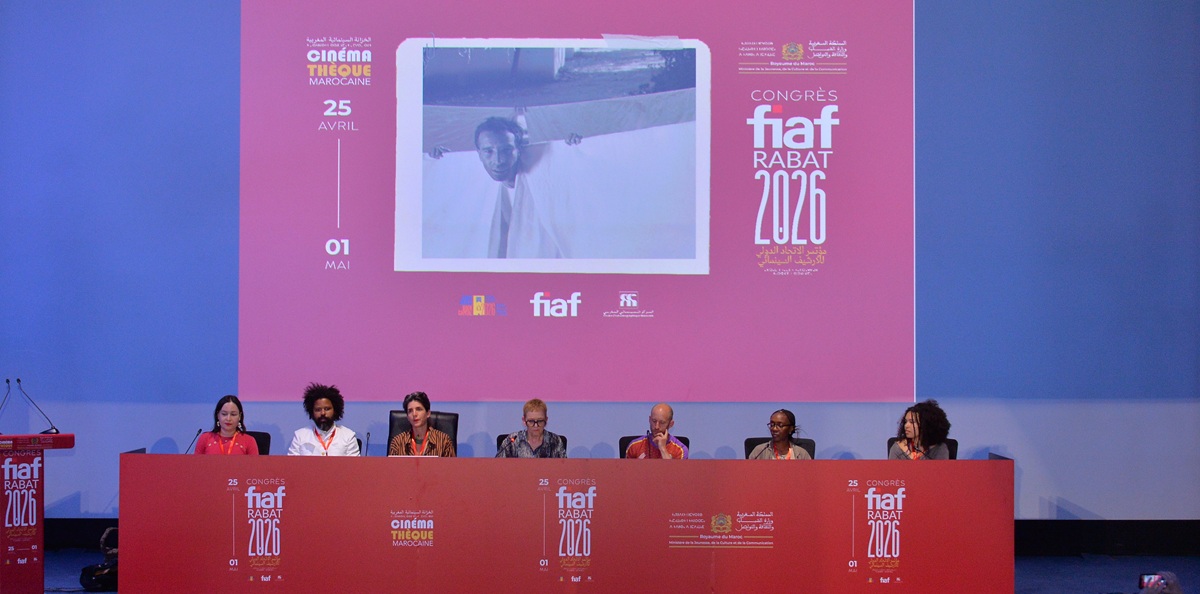
 ©Cinémathèque marocaine
2026 Rabat Symposium
Session 10 - Fostering Awareness, Creating Communities
Rabat, 28 April 2026
Please do not publish or re-use in any way any of these documents without prior permission of the speakers.
African anti-colonial archives: Circulations, practices, agropoetics of liberation
Filipa César (HfG-Karlsruhe)
Marinho Pina (Goldsmiths, University of London)
Raquel Schefer (Sorbonne Nouvelle University)
This paper presents the Mediateca and Sonotera in Malafo, Guinea-Bissau, as a case study in sustainable, community-centred archival practice. The project transforms anti-colonial film and audio heritage into a living laboratory through an “agropoetics of liberation”—a methodology integrating cultural preservation with agricultural practice and indigenous knowledge. The Mediateca emerged from a decade of work digitizing and activating Guinea-Bissau's anti-colonial archives, developing a centrifugal methodology that echoes Amílcar Cabral's liberation strategy: starting screenings in the country's geographic center before radiating outward. This approach challenges linear Western temporality with a spiral concept of time, where archival activation allows past events, sounds, and entities to become present again, “repair[ing] the web of time where it had been broken”.
The paper approaches Guinea-Bissau as a world of overlapping realities, where the living and the dead coexist and make themselves present to one another. Material, sonic, and filmic archives operate as forms of passive mediumship, summoning absent presences, proposing active mediumship, necrorality, through which the dead speak, intervene, and generate meaning within the living present.
Taking Filipa César’s feature films Spell Reel (2017) and Resonance Spiral (2024, co-directed with Marinho Pina), as well as the Mediateca—a living archive—as case studies, the presentation discusses circulation as a key feature of the African anti-colonial archive. Circulation reactivates the archives’ political, aesthetic, and epistemic dimensions, allowing for reconsideration and dislocation of its modern-colonial power-knowledge-seeing relations.
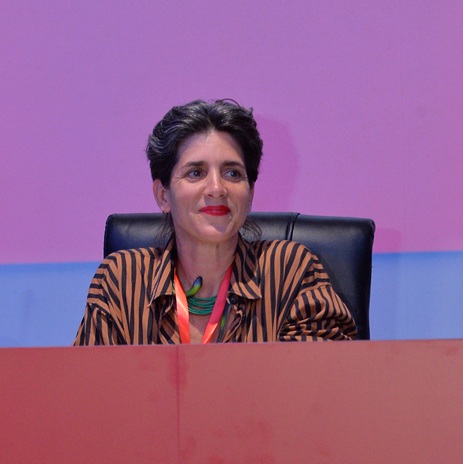
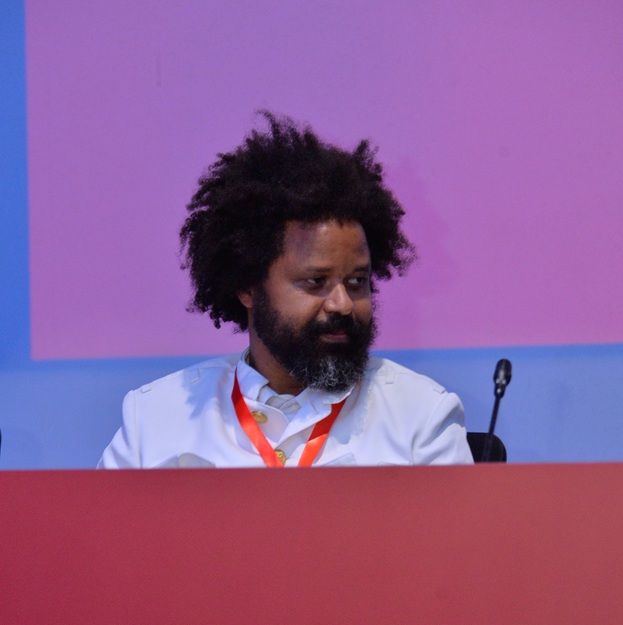
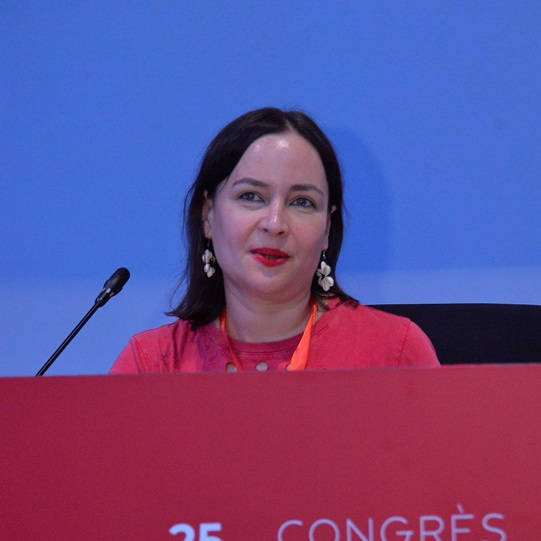
Building a Pan-African screen heritage: Regional engagement, community audiences, and archival training for youth
Damilola Lemomu (June Givanni PanAfrican Cinema Archive)
Phoebe Beckett Chingono (June Givanni PanAfrican Cinema Archive)
Benjin (June Givanni PanAfrican Cinema Archive)
This paper presents, and reflects upon, the "Building Community Audiences for PanAfrican Cinema in the Regions" project, a collaborative initiative by JGPACA supported by the BFI National Lottery Screen Heritage Fund. Through a series of pop-up archive events, curated selections from JGPACA’s holdings have been presented in Leeds, Glasgow, Cardiff, Bristol, and Birmingham, engaging local communities in the UK with the rich histories of PanAfrican and Black British cinema.
A key aim of this project was to extend beyond London, exploring what it means to build PanAfrican cinema communities in regional cities. The project shared the wealth of archival holdings on PanAfrican cinema and their relevance to transnational histories with African diaspora communities through facilitated workshops and screenings. Central to this engagement was the provision of training opportunities for emerging archivists and curators. Across all five cities, participants were encouraged to utilize archival materials, contribute to collections where possible, and develop cultural awareness of PanAfrican heritage, supporting both decolonization efforts and intergenerational knowledge transmission. For instance, in Glasgow, the exhibition "Dreaming a Black Scottish Archive at Glasgow Women’s Library" traced the cultural and historical connections between Scotland and JGPACA. This drew upon Third Cinema debates, 1980s film workshop movements, and contemporary African film curation, while highlighting Afro-Scottish artistic and cultural lineages.
Screenings for the project included landmark works such as Euzhan Palcy’s La Rue Cases Nègres (Sugar Cane Alley, 1983) and Horace Ové’s Playing Away, accompanied by introductions from Dr June Givanni with related archival materials displays. These sessions foregrounded the significance of Black women filmmakers, transnational festival networks such as FESPACO and Images Caraïbes, and the critical role of archiving in preserving these legacies. The accompanying exhibition film programmes also provided a platform for newer works and contemporary artists/filmmakers in the UK exploring PanAfrican histories, ensuring a living dialogue between historical and current cinematic practices.
Through the BFI National Lottery Screen Heritage Fund, JGPACA offered 15 paid traineeships (three per city) to emerging curators. Trainees gain hands-on experience in archival work, curation, and community engagement, producing outputs such as curated screenings, essays, or videos. In each city, JGPACA collaborated with leading film programmers embedded in local and national PanAfrican cinema education, distribution, and audience development, ensuring relevance to local communities while providing mentorship and long-term professional pathways.





partnership with