
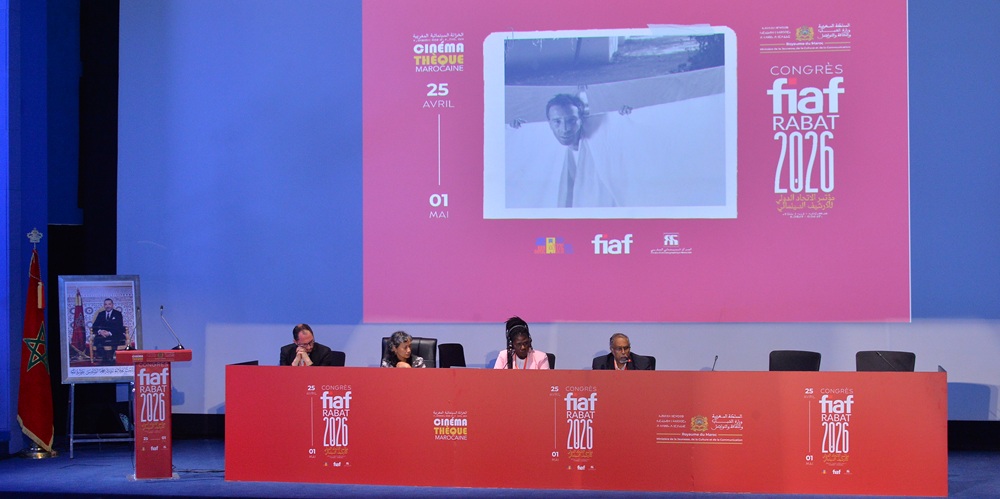
 ©Cinémathèque marocaine
2026 Rabat Symposium
Session 5 - Day 2 Keynote Speech
Session 6 - Archiving Despite Everything: Resilience and Rebuilding
Rabat, 28 April 2026
Please do not publish or re-use in any way any of these documents without prior permission of the speakers.
Quand les écrans s’éteignent : histoire de la fermeture des salles de cinéma au Maroc (1960–2025) et ses effets sur la mémoire cinématographique africaine et arabe
Mahdi Amri (Institut Supérieur de l'Information et de la Communication)
Since independence, Moroccan cinemas have been key venues for cultural exchange, the screening of African and Arab films, and the forging of a shared collective memory within the urban landscape. Between the 1960s and the early 1980s, Morocco had nearly 248 active cinemas, which served as true social hubs where both international blockbusters and major pan-African works screened at the Carthage Film Festival and FESPACO were shown. This period of expansion enabled entire generations of Moroccan cinema-goers to discover the films of Med Hondo, Sembène, Bouanani, Saleh, Cissé and Maldoror in suitable screening conditions, thereby embedding these works in living collective memory. From the 1990s onwards, a structural decline set in, linked to several factors: urban transformation, the privatization of cultural spaces, the widespread adoption of satellite television, the fragility of cinemas’ business models, weak regulation of the sector and the absence of a sustainable public policy to support cinema exhibition. Within the space of three decades, the cinema network has shrunk from 248 cinemas to fewer than 20 today, mainly concentrated in major cities. This unprecedented contraction has had major effects on the circulation and visibility of African and Arab cinematic heritage: a decline in heritage screenings, the disappearance of neighbourhood cinemas, a weakening of cinephilia, the geographical fragmentation of access to films, and a gradual disconnect between restored films and their natural audience. This paper offers a historical analysis of the phenomenon (1960–2025), whilst demonstrating how the closure of cinemas poses a major risk to the transmission of African and Arab cinematographic heritage. It draws on professional archives, institutional reports, sectoral statistics and qualitative interviews. The aim is to examine what it means to preserve, restore and digitize films when the venues that enable their sharing are disappearing. Finally, the paper will explore avenues for rethinking sustainable and inclusive distribution models, rooted in the heritage issues championed by FIAF.
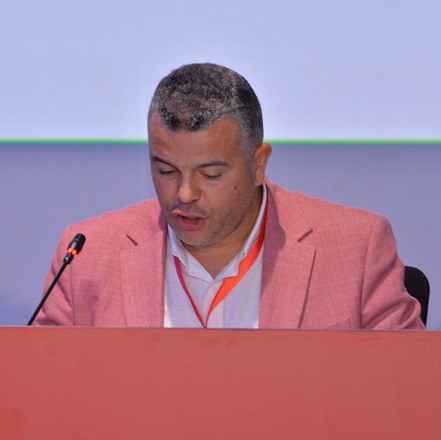
Archiver malgré la fragilité : enjeux et pratiques au sein de la Direction de la Cinématographie et de l’Audiovisuel du Sénégal
Maïmouna Diouf (Direction de la Cinématographie et de l'Audiovisuel du Senegal)
Film and audiovisual archives in Senegal are much more than simply a repository for storing Senegalese film reels or newsreels. They constitute a collective memory, a cultural and artistic heritage that bears witness to the social, political and cultural developments of an era. In a world marked by multiple crises – economic, climatic, technological and geopolitical – the issue of archiving takes on particular urgency: how can we preserve, pass on and promote a nation’s most significant moments, even when resources are limited and infrastructure is fragile?
The principle of "archiving despite everything" reflects a commitment to resilience. It is about keeping the film memory alive, even under adverse conditions. This approach is part of a broader strategy of cultural resistance: safeguarding these images means safeguarding Senegal’s identities and its socio-political and cultural aspects.
We share with great sadness that Maïmouna Diouf passed away on 12 July 2026. FIAF published a tribute to her, which you can read here.
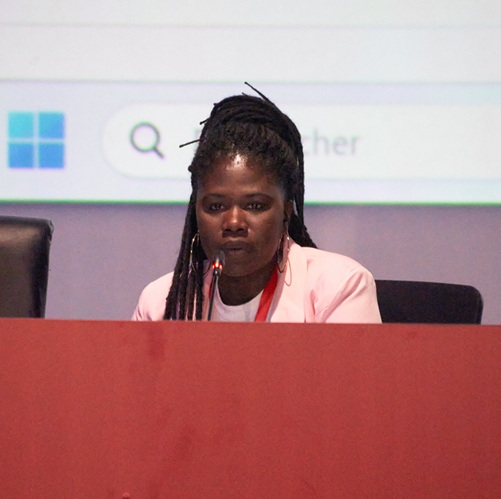
Rebuilding a national film memory: The Iraqi Cinematheque Project
Wareth Kwaish (Expertise France/Iraqi Cinematheque)
Brice Amouroux (Institut national de l'audiovisuel)
Decades of conflict have left Iraq’s film and audiovisual archives in precarious conditions, threatening the survival of a unique cultural legacy.
The Iraqi Cinematheque Project is an ambitious initiative implemented by the French public agency for international development cooperation, Expertise France, in close collaboration with the Iraqi Government. The objective of the project is to preserve, promote, and give access to a collection of Iraqi fiction films produced between the 1940s and early 2000s, while building local capacity through dedicated training programmes in film preparation, restoration and digitization. The project is carried out by a network of international players aiming to safeguard and promote Iraq’s fragile cinematographic heritage.
A significant achievement of this collaboration was the restoration of Saïd Effendi (1956), directed by Kameran Hosni and adapted from Edmon Sabri’s short story Fight. Considered a cornerstone of Iraqi classic cinema, the film was digitized and restored in 4K from its original negative at INA’s facilities in France together with the teams of the Iraqi Cinematheque. The meticulous process combined physical and digital restoration, image grading, sound repair, and subtitling, ensuring fidelity to the original work while meeting contemporary preservation standards. This effort culminated in the film’s historic selection for the “Cannes Classics” section at the 2025 Cannes Film Festival in May, the “Cairo Classics” section at the International Cairo Film Festival, and the Marrakech International Film Festival in November 2025 - marking a symbolic revival of Iraq’s cultural identity on the global stage. Supported by the Al-Hasan Ibn Al-Haytham Committee for Iraqi Visual Memory under the Iraqi Prime Minister’s Office, and by the French Ministry for Europe and Foreign Affairs through the Embassy of France in Iraq, the project is implemented by Expertise France in partnership with INA.
This paper aims to explore how the Iraqi Cinematheque Project’s methodology, governance model, and capacity-building approach demonstrates ways to safeguard endangered film heritage and foster sustainable international cooperation.

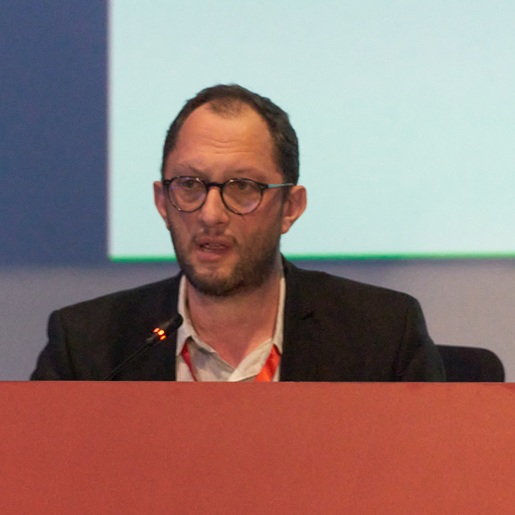
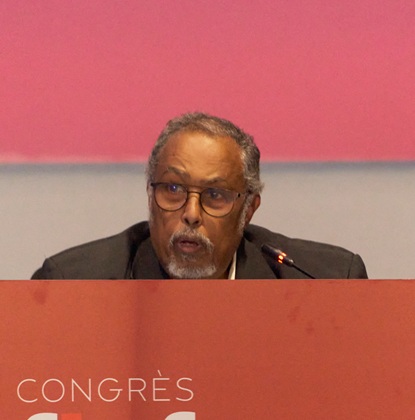
The situation of the Somali Archives
Abdulcadir Ahmed (Somali Film Institute)
In general, the African and Arab film heritage remains among the least well-preserved, disseminated, exhibited and funded, for reasons that are inseparable from inherited and applied colonialism and neo-colonial practices. The inherited colonial and neocolonial situation in a country gets worse when a civil war breaks out. The entire cultural infrastructure of that country is ruined; all existing cultural services are disabled. Cultural heritage preservation institutions such as museums, libraries, archives, theatres, and heritage sites have been wrecked and associated holdings, collections, artifacts, and documentation been either destroyed or looted, for the most part.
This is the situation of Somalia, a founding member of the Organization of African Union and member of the Arab League. This paper draws the attention of the case of Somalia, in the hopes of finding partners to collaborate in the restoration and rebuilding of our shattered memory.





partnership with