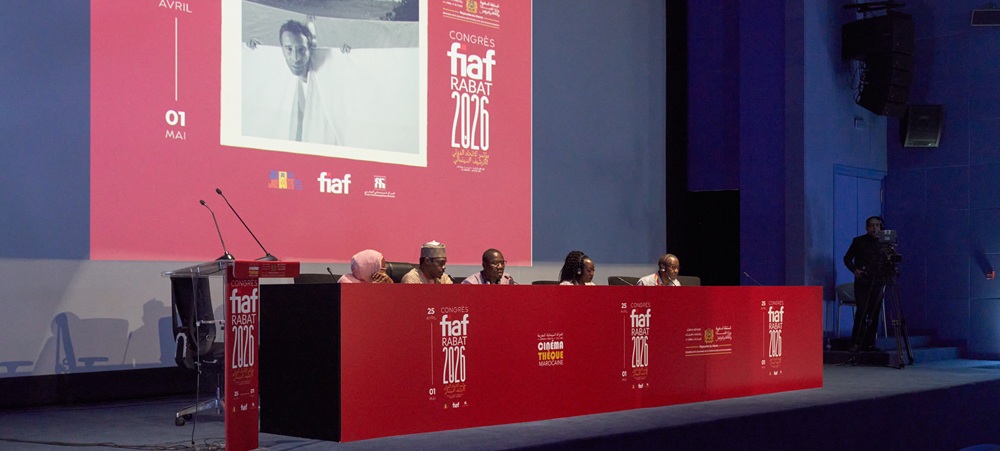
 ©Cinémathèque marocaine
2026 Rabat Symposium
Session 4 - Challenges and Opportunities Facing African Film Heritage
Rabat, 27 April 2026
Please do not publish or re-use in any way any of these documents without prior permission of the speakers.
From analogue to digital: Public funding, workforce support, and the transformation of the film archives
Masego Mmutle (South African National Film, Video and Sound Archives)
Over the years, the National Film Video and Sound Archives has been handling their collection manually. This includes preservation of analogue material and access through playback of the physical analogue carrier. Preservation has always been the institution's priority to ensure that archival records are safeguarded for posterity and are accessible to users. The rapid shift from analogue to digital technologies has transformed how various nations preserve and provide access to their audiovisual heritage. This paper aims to examine the pivotal role of public funding and workforce support, specifically with initiatives such as the Presidential Employee Stimulus Package (PESP) in kickstarting the digitization and modernization of film archives. This ethnography study utilized interviews with archivists at the NFVSA, observation, as well as the personal experience of the researcher to collect qualitative data. The study unpacks how government investment and support enabled archives to upgrade technical infrastructure, expand digitization capacity, and create employment opportunities during a period of economic uncertainty. The findings thereof highlight how stimulus-driven workforce programs do not only sustain skilled labour in the heritage and creative sectors but also serve as catalyst in accelerating long-term institutional transformation, including improved preservation standards, expanded digital access, and enhanced national cultural resilience. The paper argues that strategic public funding mechanisms can serve as effective models for future cultural preservation initiatives, demonstrating that economic recovery and heritage conservation can be mutually reinforcing goals in the digital era especially within less-funded institutions.
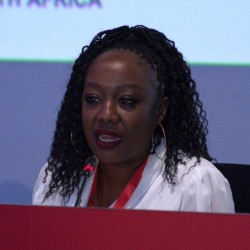
Reclaiming Nigeria's audiovisual heritage through archives, memory and preservation
Ali Nuhu (Nigerian Film Corporation)
This paper highlights the importance of preserving Nigeria's rich audiovisual heritage, which spans over a century, and the need for hybrid methodologies that combine institutional archiving with community-based, private, and diasporic initiatives. Digital-first strategies are essential for preserving born-digital productions and older works. Equitable collaboration with international partners is also crucial, ensuring that Nigeria's cultural heritage is preserved and made accessible to future generations. The National Film, Video and Sound Archive (NFVSA) is a crucial institution tasked with preserving Nigeria's audiovisual heritage, but faces challenges such as limited funding, insufficient storage, and lack of technical expertise. It is working to address these issues, through training programmes for staff and partnerships with international organizations, including signed agreements with countries like France and South Africa to
promote audiovisual cooperation and cultural exchange among others, with deep commitments and emphasis on the importance of reclaiming Nigeria's audiovisual heritage, not only as a matter of national identity but also as a critical intervention in global film historiography.
Preserving Nigeria's audiovisual heritage, the largest in Africa, is not only important for national identity but also has economic benefits. For all the efforts, the goal is to recognize Nigeria's audiovisual heritage as a living foundation for future cultural production, rather than just a relic of the past.
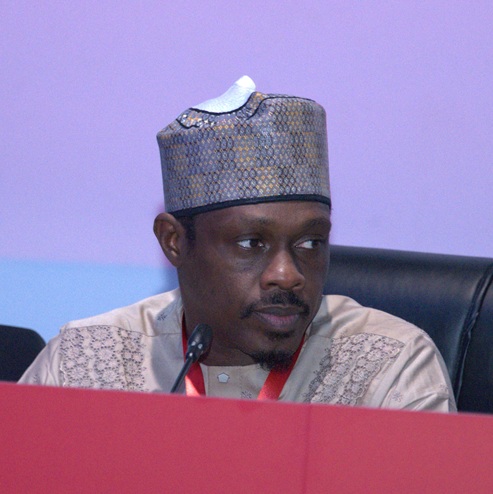
The state of film archives' future in the era of artificial intelligence (AI): A case study of the Kenya National Archives
Francis G. Mwangi (Kenya National Archives and Documentation Service)
The Kenya National Archives and Documentation Service (KNADS) was established by an Act of Parliament, the Public Archives and Documentation Service Act (PADSA; 1965), to provide for the Preservation of Public Records and Public Archives. Section 4(1)(g) of the PADSA requires the Director of the Archives to “make arrangements for the separate housing of films and other records which require to be kept under special conditions”. The section enabled KNADS to collect most of the colonial films that were available and preserved them for immediate and future use.
During this period, everyone was talking about and watching movies. The Kenya National Archives was charged with preserving the films that had been screened over time and had been replaced by new releases. KNADS was equipped with an auditorium that was used to showcase these films.
Over time, phones, home theatres, the Internet and now artificial intelligence became the new entertainment methods.
The present state of film heritage at the KNADS is a little wanting, due to its storage environment; funding; maintenance and technology. Possible solutions to these issues include encouraging the preservation and promotion of film archives; partnership with likeminded institutions; regular screening of preserved films; and the migration and digitization of film heritage.
Présentation de la Cinémathèque Congolaise Grand Tambour
Sandra Mushid (Cinémathèque Congolaise Grand Tambour)
The Cinémathèque Congolaise Grand Tambour plays a vital role in promoting, preserving and disseminating Congolese cinema, whilst forming part of a broader cultural vision championed by CCAPAC – Grand Tambour. In just a few months, this centre has become an essential venue for artists, film enthusiasts and the Congolese public with an interest in audiovisual expression.
Accessing the cinematographic collection at the National Archives of Zimbabwe: Challenges and opportunities
Samuel Chabikwa (University of Zimbabwe)
Kudakwashe Mavingire (National Archives of Zimbabwe)
The Audio-Visual Unit of the National Archives of Zimbabwe (NAZ) is mandated to make accessible its cinematographic collection to patrons and others users of the archives. However, this is plagued by a number of challenges ranging from the technical to political. The purpose of the study is to describe the challenges and opportunities that exist in accessing the cinematographic collection stored at the NAZ. The study was a descriptive case and qualitative. The main research question was what challenges impact access to the Cinematographic heritage of Zimbabwe at NAZ. The major finding was that the analogue formats are not accessible due to lack of playback equipment and fragility, whilst for the digitized few access is minimal because of limited equipment for viewing in the repository. The study concludes that the current digitization project though noble is failing to satisfy user needs to view and consume films at the NAZ. The study recommends that more viewing and playback equipment be bought, expand the viewing facilities, and that the digitization project be completed to mitigate the challenge of lack of playback equipment for analogue formats. The study contributes to the growing literature on film archiving in Zimbabwe and the region.
Préservation des archives cinématographiques et audiovisuelles au Niger : un vrai défi à relever
Salamatou Hama Maiga (Centre National de la Cinématographie du Niger)
The issue of the preservation and promotion of film and audiovisual archives is particularly acute in African countries and represents a major challenge for the preservation of Niger’s collective memory and cultural heritage. These archives, which are essential records of Niger’s political, social and artistic history, are at risk of being lost due to the fragility of analogue storage and preservation media, the lack of suitable technical resources and an inadequate institutional framework. Consequently, they are deteriorating at an accelerated rate due to climatic conditions and storage conditions (premises), a shortage of qualified professionals and a lack of financial resources.
This study focuses on an analysis of the challenges associated with preservation. It highlights the technical and institutional obstacles, whilst also showcasing initiatives at national level, such as digitization projects. The paper also examines the prospects for implementing an integrated national strategy that takes into account the strengthening of technical, professional and operational capacities to ensure better management of film and audiovisual archives in Niger.
This study draws on professional experience, bibliographic research and fieldwork.
As the issues raised by the study are not merely technical, but also relate to culture, heritage and identity, the aim is therefore to influence political will and stakeholders in the sector, but above all to explore ways of creating synergies with sister institutions affiliated to FIAF.






partnership with